The Background of Bharathanatyam
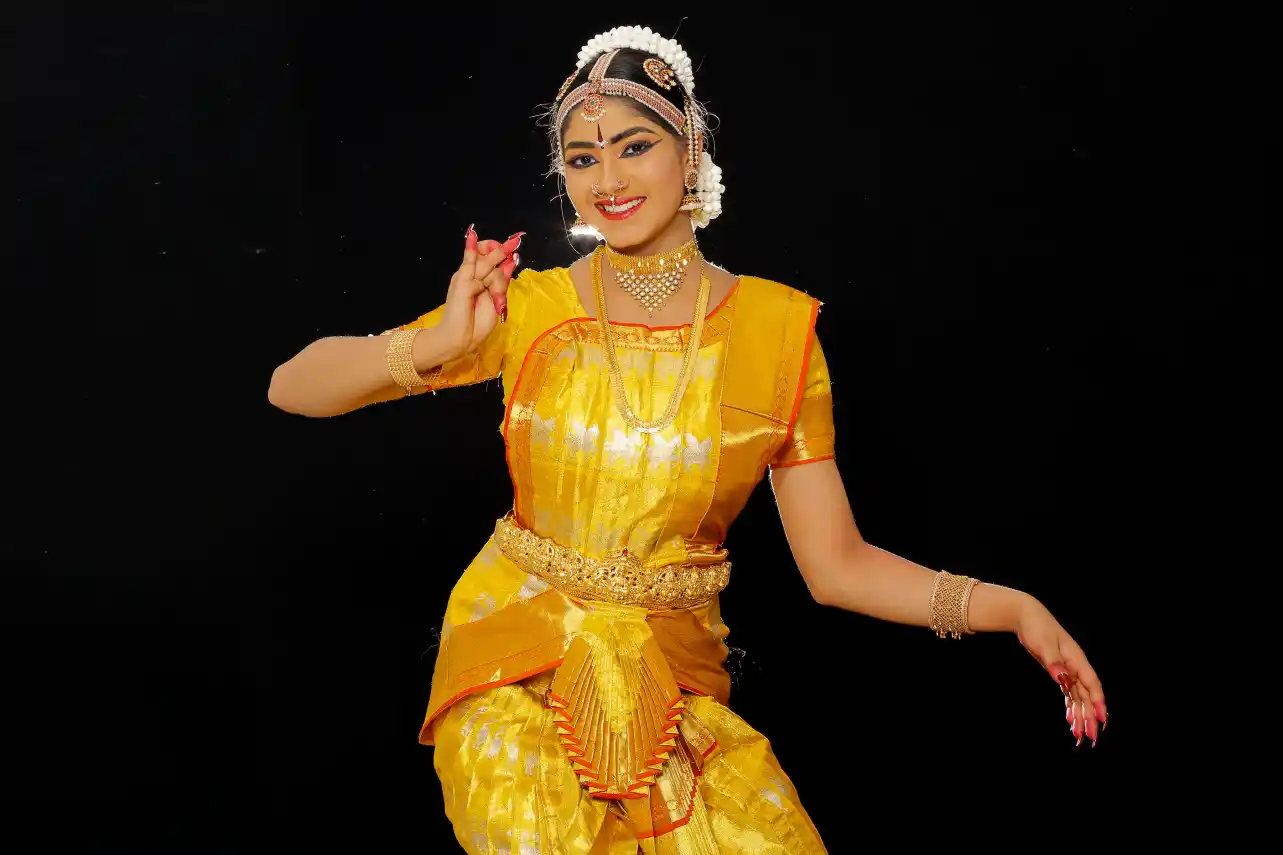
Bharathanatyam is one of the oldest classical dance forms of India, originating in the temples of Tamil Nadu. It is a highly expressive dance form that combines intricate footwork, elaborate hand gestures (mudras), and facial expressions to convey stories, emotions, and religious themes.
Pillars of Bharathanatyam
Natya
Nritya
Nritta
Your Bharathantyam Journey in Abhiraami Arts Academy
- Bharathanatyam BasicsThe Bharathanatyam basics include learning the Namasakaram, Hastas and Bedas, and Adavus. These are the foundations that every Bharathantyam dancer must learn. Think of these as the alphabet that you will use to string words, sentences, paragraphs, and stories later on!
- AlarippuThe word "Allaripu" is derived from the Tamil words "al" (to adorn) and "aripu" (to flourish or express). Allaripu serves as the opening item in a Bharathanatyam performance and is a pure dance (nritta) item, focused entirely on rhythmic movements without any narrative or expressional content.
- JathiswaramThe word "Jathiswaram" literally translates to jathis (rhythmic patterns) and swarams (notes). Jathiswaram is characterized by its balanced structure, often consisting of repetitive rhythmic cycles (tala) that are executed with increasing complexity.
- VarnamThe Varnam is the centerpiece and the most elaborate item in a Bharatanatyam performance, blending both pure dance (nritta) and expressive storytelling (abhinaya). It is the longest and most challenging piece. The Varnam tests the dancer's stamina, technical prowess, and emotive capabilities, making it a true showcase of their artistry.
- Padams and JavalisPadams and Javalis are both expressive dance forms in Bharatanatyam that emphasize the abhinaya. Padams are slow, lyrical compositions that express profound emotions, typically centered around themes of devotion, romantic longing, or other solemn themes. Javalis are more light-hearted and faster-paced than Padams, often dealing with the playful and romantic aspects of love. While Padams delve into the deeper, more spiritual or complex emotions, Javalis offer a contrast with their light-hearted and engaging narratives.
- TillanaThillana is known for its lively, rhythmic, and joyous nature. It is a pure dance (nritta) item that emphasizes intricate footwork, vibrant movements, and rhythmic patterns. The Thillana is a celebration of rhythm and movement, providing a dynamic and exhilarating conclusion to the recital.
- MangalamFollowing the Thillana is the Mangalam which concludes the repertoire. It marks the end of the recital and is performed to express gratitude to the deities, the guru, the musicians, the audience, and the earth, which has borne the dancer’s movements throughout the performance.